
The Global Nitrogen Crisis—And How Your Garden Can Be Part of the Solution
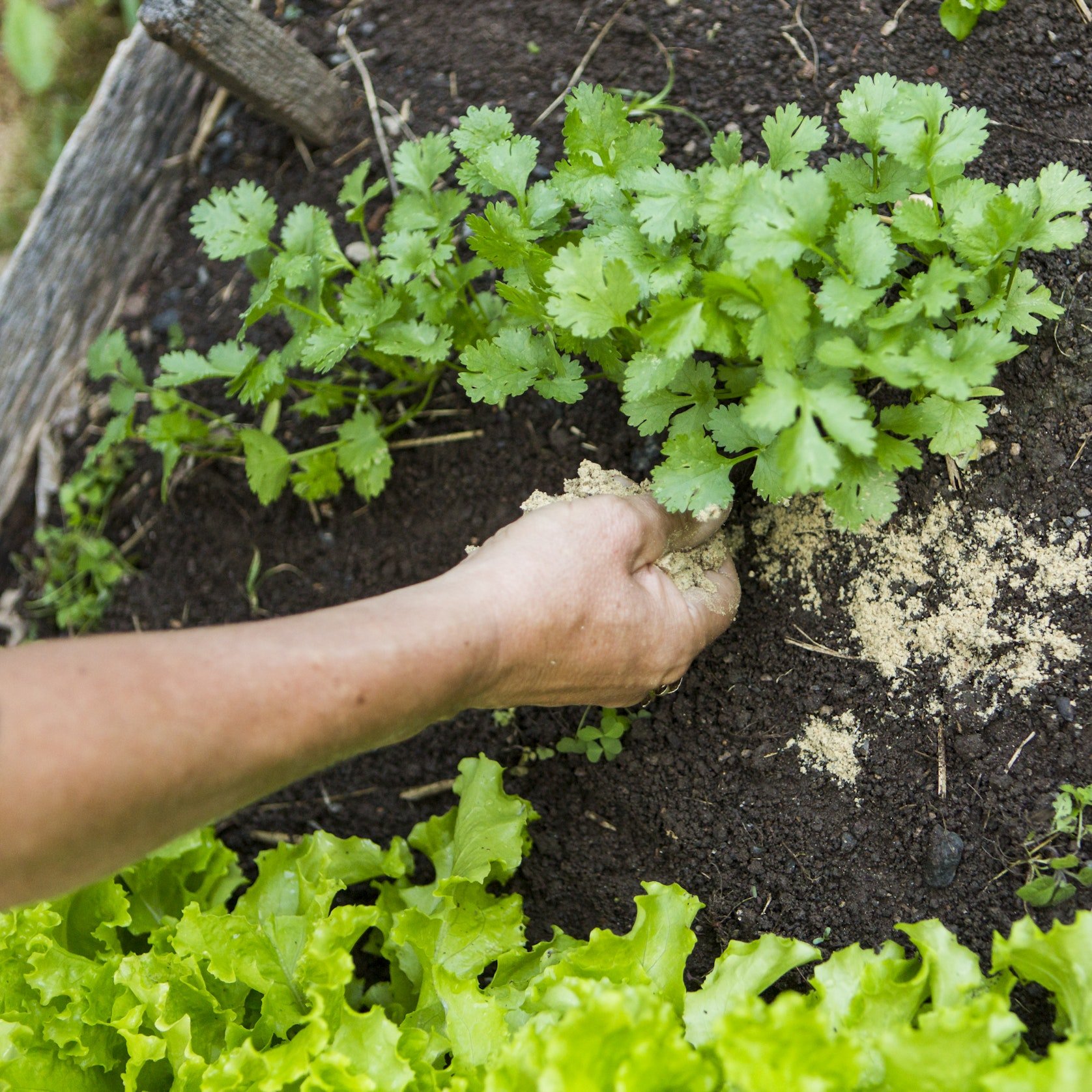
Side-dressing cilantro with Symphony fertilizer
Photo Credit: Sarah Tew
Similar to how humans require protein, fats, carbohydrates, vitamins and minerals in order to thrive, plants require a whole variety of “foods” to grow, mature, and provide food for everyone else. Macronutrients are what plants need large amounts of, while micronutrients are crucial, but are needed in smaller quantities.
Of the macronutrients, one in particular is a key player in the global fertilizer crisis that’s underway right now as a result of the US and Israeli invasion of Iran and subsequent shipping slowdown through the Strait of Hormuz.
Nitrogen.
This essential plant macronutrient is considered the second most important thing that plants need, after water—it fuels green growth and plays a smaller role in reproduction. Protein molecules, enzymes, DNA, and chlorophyll all require nitrogen and are important elements that make up plants’ bodies and allow them to function.
Nitrogen is Everywhere, but Plants Need a Specific Form
Although Earth’s atmosphere is 78 percent nitrogen, the form that floats through the air (dinitrogen, N₂) isn’t usable by plants. It must be first transformed into nitrate (NO₃) or ammonium (NH₄) before it can be absorbed by plant roots. This happens naturally in a variety of ways: mostly with the help of various microorganisms in the soil, and to a much lesser degree when lightning strikes. Also, plant-available forms of nitrogen get cycled through ecosystems in the form of urine and manure from animals (including us), and decomposing plant material.
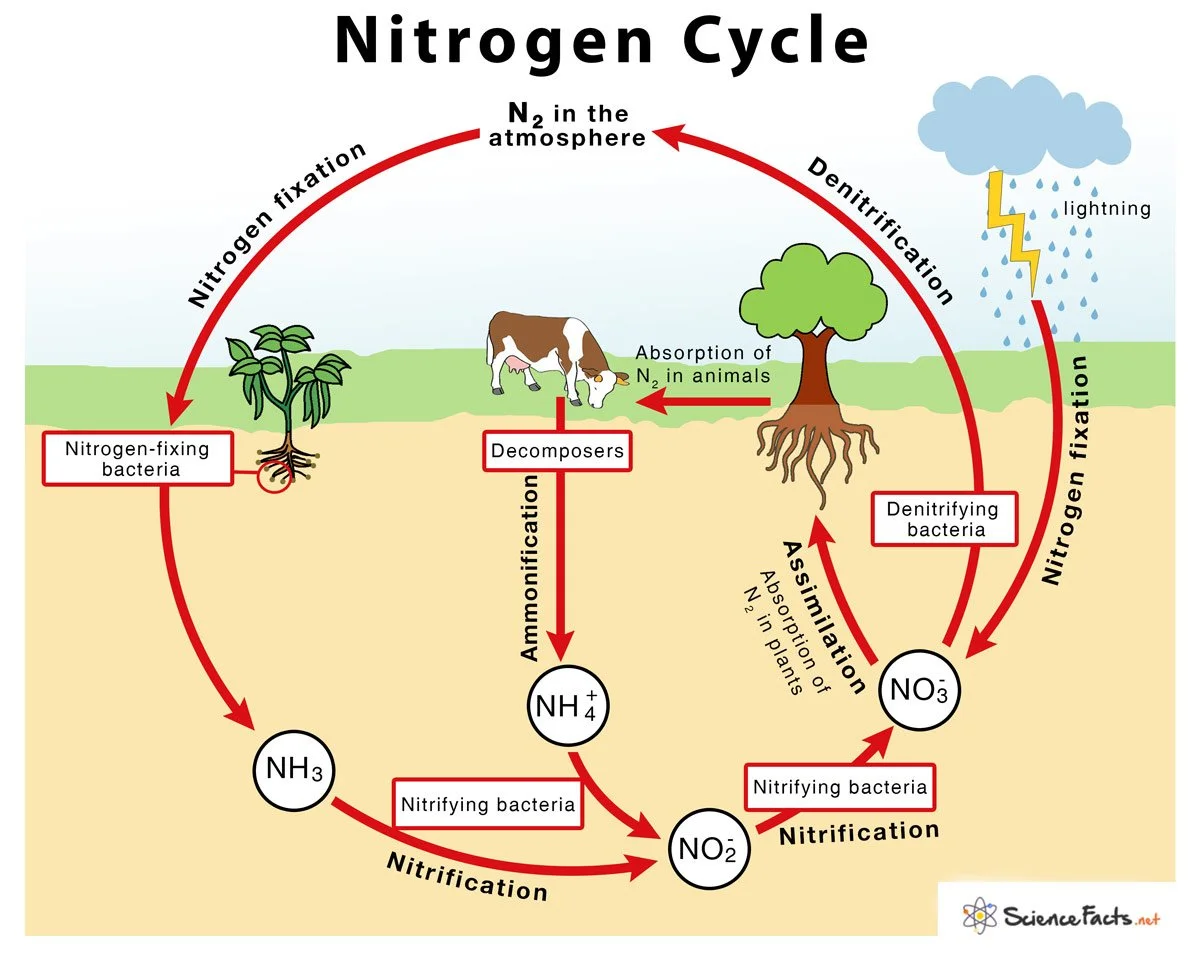
These were the ways that our food-plants received their essential nitrogen doses before industrial agriculture. And traditional agriculturalists all over the world managed them fairly well for several thousand years.
How Industrial Fertilizer Became Essential (And Problematic)
By the end of the 19th century, populations and rates of consumption were booming. Industrial capitalist expansionism—and its associated exploitation of resources—had been spreading around the world in earnest for about 500 years. Scientists were concerned about a nitrogen shortage. As a result, in the early 20th century, German chemists Fritz Haber and Carl Bosch developed a new way to turn atmospheric nitrogen into plant-available nitrogen.
The Haber-Bosch process is still what’s used today to create synthetic nitrogen fertilizers. Here’s how it works in a nutshell: Atmospheric nitrogen is combined with hydrogen under extremely high pressure and temperature in the presence of a metal catalyst, usually iron. Natural gas is what’s usually used to provide the hydrogen molecules, as well as the heat and pressure.
The result is a highly concentrated and also toxic form of ammonia called anhydrous ammonia, which is used extensively in industrial agriculture. This product is extremely rich in plant-available nitrogen, but also difficult to store and use safely. Because of the toxicity and storage challenges, anhydrous ammonia is also made into other, more stable forms of fertilizer, like urea and urea-ammonium nitrate solutions, among others. Overall, about 50% of the world’s food is grown with these products.
The Environmental Cost - Soil and Water Dead Zones
Over 100 million metric tons of synthetic nitrogen fertilizers are used every year in global agriculture. This leads to a lot of rapid plant growth and higher overall yields, but also contributes to imbalances and degradation in soil and water ecosystems. In fact, nearly two thirds of nitrogen fertilizers run off into waterways. There, they cause algae growth that chokes out oxygen and causes dead zones in rivers, streams and oceans. Overapplication of concentrated nitrogen also destroys the very same soil microorganisms that naturally fix nitrogen—making it available to plants—and cycle it through the soil.
Why Organic Nitrogen Fertilizers Work Differently
Any concentrated source of nitrogen fertilizer can cause pollution, but organic sources are way less likely. Organic nitrogen fertilizers come in lower concentrations and less soluble forms, leading to slower-release of the nutrient over time. Plus, organically-managed soils have higher concentrations of organic matter and soil life, which both act as buffers and reduce nitrogen runoff. Most organic sources of nitrogen, when applied properly, actually benefit soil life.
What We Gardeners Can Do
Okay, time to put down the chemistry and history books, and get back to the garden. We organic growers do not—and, in the case of Certified Organic farmers, cannot—use synthetic fertilizers, so how do we grow lush, green, healthy plants?
Instead of relying on fossil-fuel-dependent fertilizers, organic growers build soils that produce and cycle nitrogen naturally. Here's how:
Nurture a healthy soil food web by: protecting soil with mulch; reducing tillage; composting; cover cropping; adding biological amendments like compost teas and other biological extracts
Grow legumes (as crops and cover crops), inoculating their seeds with appropriate Rhizobia bacteria that will take up residence in their roots and offer natural nitrogen-fixing services in exchange for food (sugars) and shelter (root nodules)
Actively recycle nitrogen through the system by composting crop residues and animal manures
Add organic nitrogen sources only when they’re needed (see list below of options)
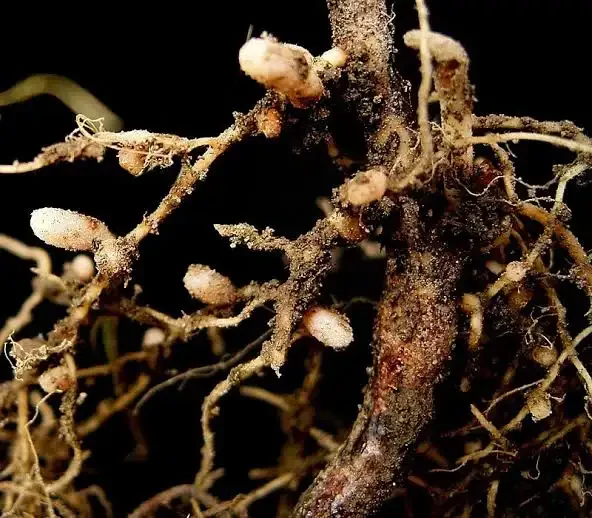
Rhizobium bacteria for nodules in the roots of legume plants.
Photo Source; Milne Publishing
Soil that’s high in organic matter and biological activity has a much greater capacity to hold onto nitrogen when it’s added. And, soil microbes are the original nitrogen fertilizer manufacturers, but they do it without any fossil fuels or waste. Nitrogen that cycles naturally through such a rich, living soil is made available to plants right when they need it, and it’s absorbed by other organisms when plants have had their fill. This not only leads to happy plants, but it prevents nitrogen pollution of waterways. It takes a bit more care and attention to grow food like this, but the benefits—healthier plants, healthier soil, cleaner water, more sustainable food systems, lower reliance on imports—are more than worth it.
Organic Nitrogen Fertilizers for the Garden
Here are some of the best organic nitrogen sources you may want to use in your garden. Notice than some of them are byproducts of more industrial agriculture, which means their production may also be linked with synthetic fertilizers. We are all part of the web!
Alfalfa meal. Good source of all three macronutrients (N, P, and K), plus calcium, micronutrients, and biostimulants (hormone-like growth-inducing compounds); slow release; good stuff, but fairly expensive. Choose organic instead of nonorganic; it’s usually genetically modified (GM) if not certified as organic.
Bat guano. Concentrated source of N and P; specific amounts of macronutrients depend on the bats’ diet; mined from naturally occurring deposits (beneath bats’ sleeping spots); may provide fungicidal and nematicidal properties (can kill fungi and nematodes); fast release; expensive but very effective.
Blood meal. Concentrated source of N; raises soil pH (alkaline); by-product of beef and pork industries; fast release, can burn plants if applied directly to them; mix in right before planting, or side-dress without touching plant stems.
Cottonseed meal. Good source of N and P; rarely available organic, most often GMO; tends to have heavy pesticide residues; lowers pH of soil (acid); slow release. Cotton production is itself quite hard on soil, and chemically intensive if not Certified Organic.
Feather meal. Fairly affordable concentrated source of N; by-product of poultry industry; semi-slow release.
Fish fertilizer (meal or liquid). Good source of N and P in plant-available forms; stimulates biological activity in soils; slow release in meal form, fast release in liquid form; smells fishy; more and more likely to contain microplastics and other toxins that are polluting global oceans.
Prepared poultry manure pellets. Good source of N, P, and K, plus calcium, iron, and some micronutrients; by-product of egg industry; semi-slow release; some products come from organic egg production (Symphony brand), others from nonorganic egg production (Harmony brand), others from broiler operations are less ideal because they contain bedding material.
Soybean meal. High levels of N and K; slow release, takes a while to break down and is best applied pre-planting; choose organic or non-GMO instead of “conventional” GMO.
Human urine. Good source of all three macronutrients (N, P, and K), plus some micronutrients. Free and available to everyone. Safe and easy to use as a liquid fertilizer. Learn more at the Rich Earth Institute, where large-scale trial and projects are underway.
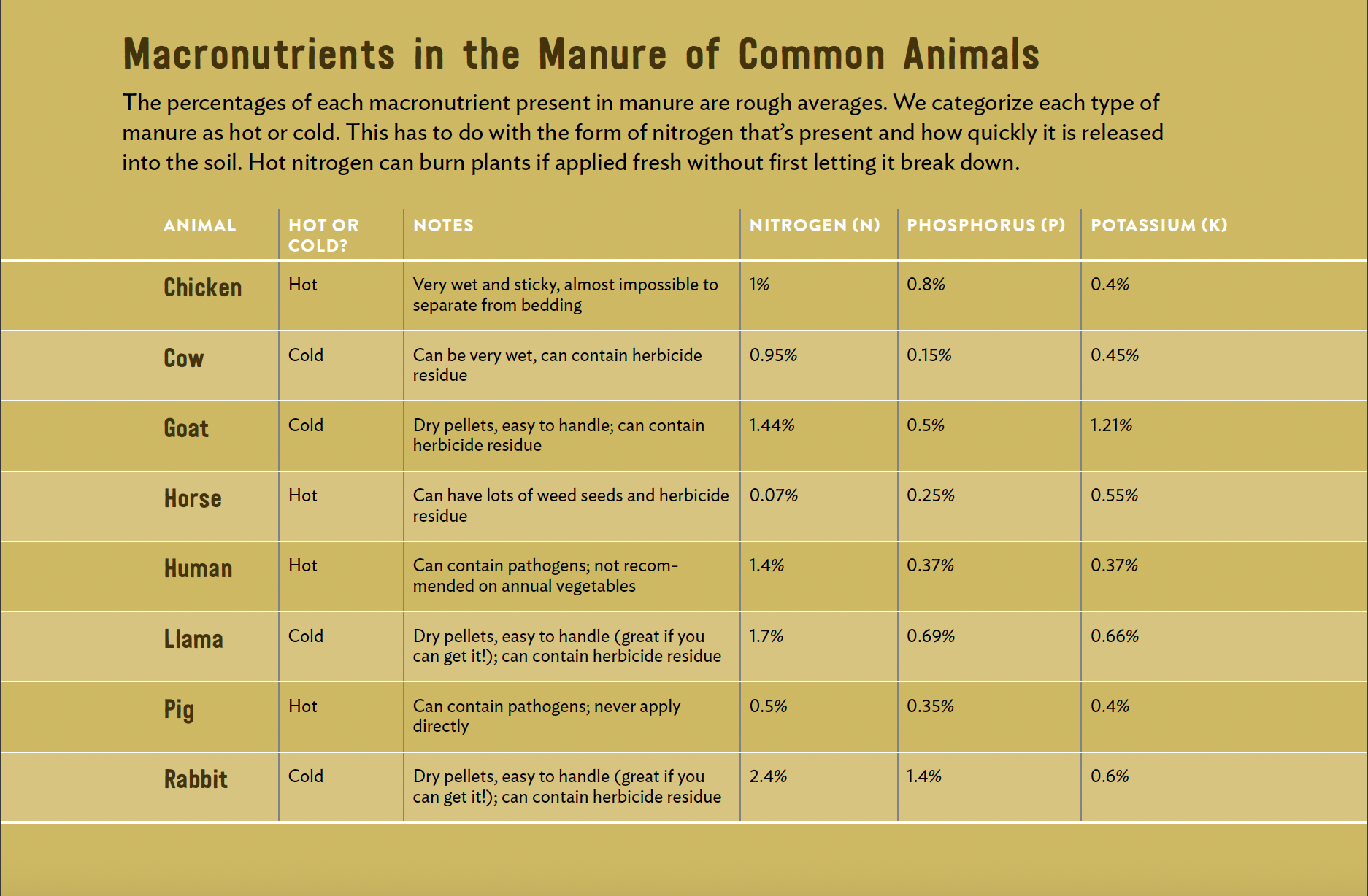
Animal manures. Good source of all three macronutrients (N, P, and K), but especially rich in N and P. Some types need to be composted or aged before using. Actual nutrients contents depend on the animals’ diet, storage conditions, and other factors.
Check out this chart from our book, The New Natural Food Garden, that goes into more detail:
A Final Thought
The global fertilizer crisis will impact billions who depend on industrial agriculture—children, families, farmers, and communities—many of whom were pressured into reliance on synthetic fertilizers by industrial powers and policies. This is a serious concern requiring systemic solutions far beyond backyard gardens.
But for those of us who do have land to tend, building soil that feeds itself is both a practical response to supply disruptions and a tangible act of resilience.
As fertilizer prices rise and availability becomes uncertain, knowing how to grow food without synthetic inputs becomes an even more valuable part of a more distributed, stable food system. Every garden that builds healthy soil contributes to a future where the cycles and relationships that have sustained life for thousands of years are once again honored and revered.
To learn more about natural and organic fertilizers and fertility-management, check out our book, The New Natural Food Garden.
Sources
“The Other Global Crisis Stemming From the Strait of Hormuz’s Blockage.” Noah Gordon and Lucy Corthell, Carnegie Endowment for International Peace, 2026.
“Synthetic Nitrogen Fertilizer in the U.S.” Sarah Sellars and Vander Nunes, University of Illinois, 2021.
“Excess fertilizer use: which countries cause environmental damage by overapplying fertilizers?” Hannah Ritchie, Our World In Data, 2021.
Elaine Ingham discusses the different forms of nitrogen. Farming Secrets YouTube.
