
A Handful of Magic Seeds: Why Varieties Matter More Than You Think
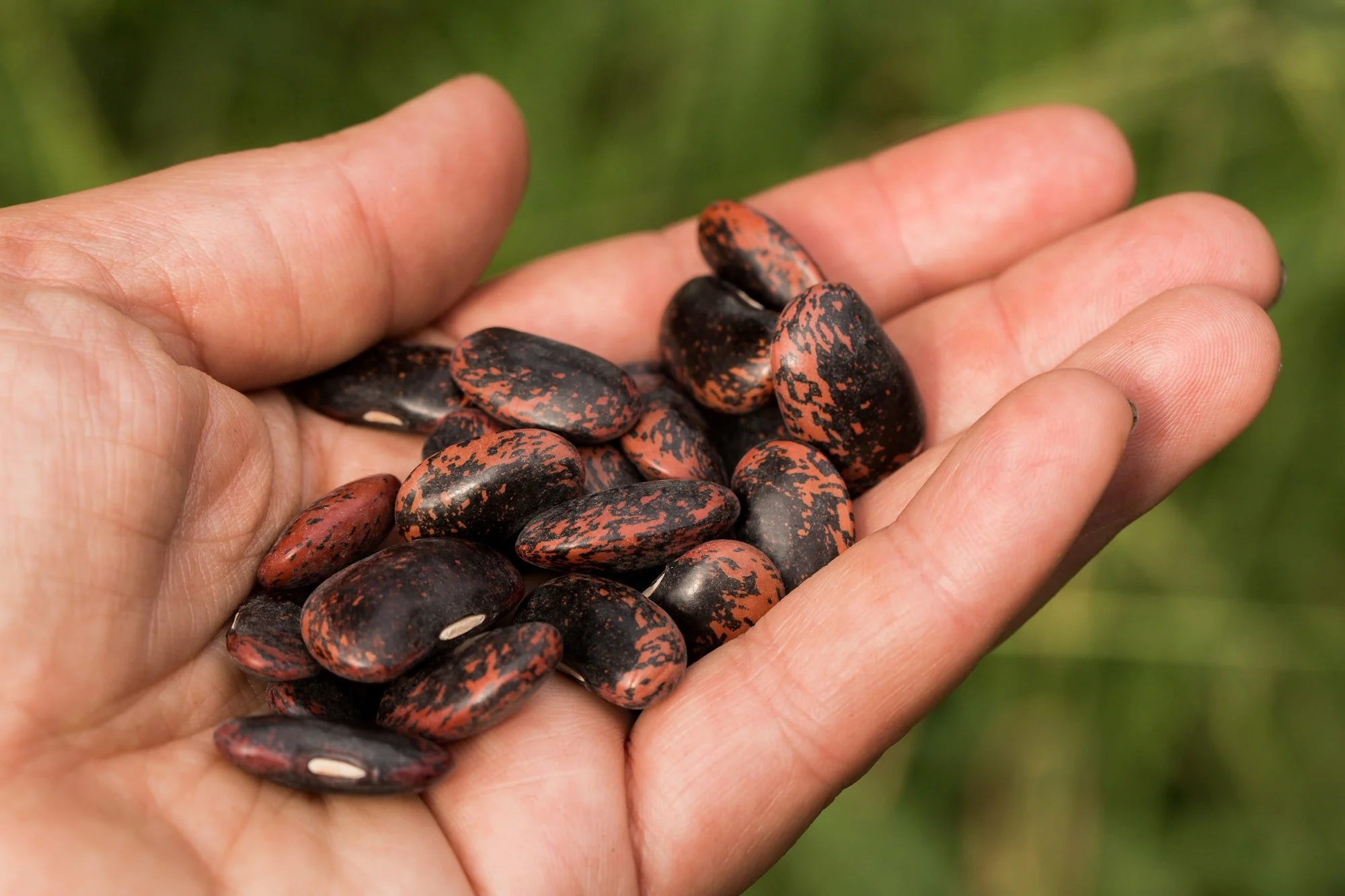
‘Scarlet Runner’ beans. Photo by Sarah Tew
Choosing the right varieties can make the difference between fruitful and floundering, mouth-watering and watery, satisfaction and struggle. Here’s the secret: all seeds aren’t created equal!
Soil, sunshine, and water are the generous collaborators who make our food gardens flourish; seeds hold the blueprint for each plant that will emerge there. They dance together to ancient rhythms, yielding flavors, textures, delights, and deep nourishment for us gardeners to enjoy. We also have a voice in the chorus, and over time we can ask plants to adapt to our needs and desires.
Humans have been nudging plants toward qualities we want in them since before the official birth of agriculture. As any modern forager knows, it’s easy to spot the biggest acorns or taste the sweetest berries. The natural next step is to care for and encourage those specimens to spread and thrive. This kind of conversation has led to the development of all our modern food crops, and has resulted in an incredible diversity of traits and characteristics in those crops.
Not only have humans coaxed modern carrots, for example, into having bigger, sweeter, more colorful roots than their wild ancestors, we’ve also developed hundreds of distinct varieties of the beloved root vegetable. Some are slender, sweet, crisp, and quick to mature; others are short, fat, dense, and slower to mature, but will keep in the ground nearly all winter long; still others have magenta-colored skin, packed with nutrients, and tops that grow quickly and out-compete weeds.
Planting the right varieties can make a world of difference
Anyone who has tasted an heirloom tomato will attest to the wildly different flavors that can exist between vegetable varieties—the heirloom like a party in your mouth and the grocery-store tomato like a watery blob of cardboard. But other characteristics can be bred or selected for, too. Some of them make a big difference in the garden, not just on the plate. The fast-growing carrot tops mentioned above are a great example (a variety called Dragon, in case you were wondering). If you’ve grown carrots, you know that it can be a hand-wringing race between tiny, lacy carrot tops and whatever vigorous weeds may also call that ground their home.
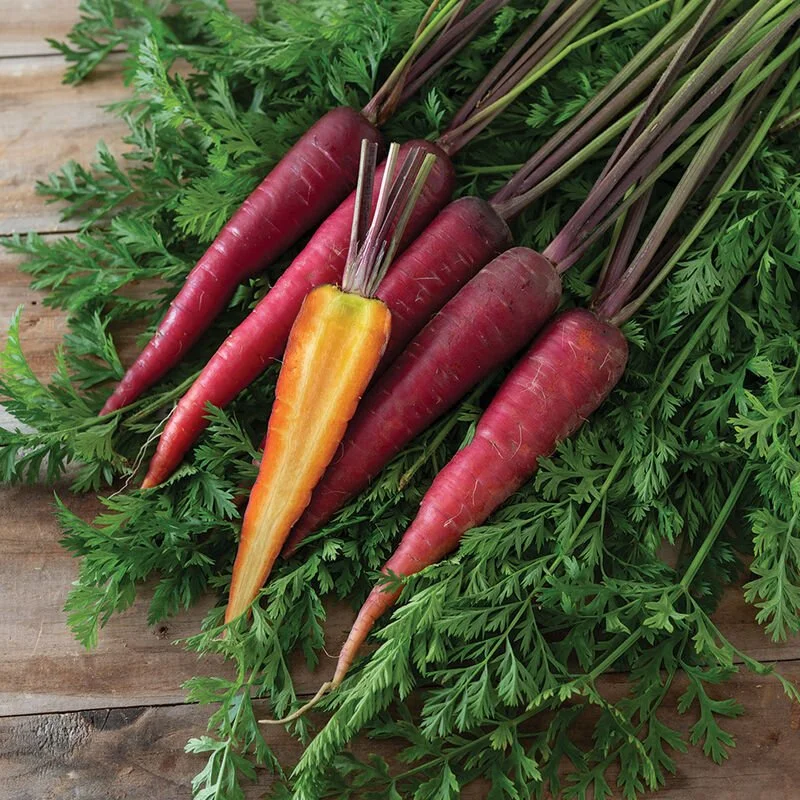
‘Dragon’ carrots. Photo from Johnny’s Selected Seeds
Here are some characteristics that can be expressed in vegetable varieties:
Flavor & Harvest
Flavor and texture – From buttery 'Optima' lettuce to dense, meaty 'Costata Romanesco’ zucchinis
Nutrient density – 'Mini purple' daikon radishes have more antioxidants than their white-colored cousins
Days to maturity – 'Mokum' carrots ripen in just 48 days and are great spring snacker; 'Red Cored Chantenay' takes 70+ but grow very large and will keep in the ground until spring
Harvest window – ‘Piracicaba’ non-heading broccoli gives an abundance of small florets over many weeks, or even months
Garden Performance
Pest and disease resistance – 'Prospera DMR Basil' stands strong in the face of downy mildew; 'West Virginia 63' tomatoes resist late blight
Vigor and growth habit – Compact 'Bush Delicata' squash fits in small spaces; 'Dragon' carrots outrace weeds with fast-growing tops
Climate adaptation – 'Kew Blue' beans will germinate in cool, moist soil; 'Soraya’ potatoes can thrive even with low fertility and inputs
Drought or heat tolerance – 'Jackson Wonder’ lima bean can yield heavy with less water; many lettuce varieties bolt in heat while 'Jericho' holds steady for weeks
Practical Considerations
Storage and keeping quality – 'Clear Dawn' onions store for 8+ months; ‘Juliet’ grape tomatoes don’t crack on the vine if you forget to harvest frequently
Beauty – Magenta “Double Red’ sweet corn stains your fingers purple while you eat it; “Purple Moon’ cauliflower is a show-stopper in the garden and roasted with white cauliflower
Seed-saving ease – ‘Spinners Ivory’ cotton has seeds that are easy to remove from bolls (okay, it’s not a vegetable…but it’s really fun to grow!)
How do they (we) do it?
Well, the story is in the seeds. We cannot dramatically change the qualities of an already-growing plant, but we can cross-pollinate different plants (or different varieties) hoping for a mix of the traits we like in each. We can also select which plants we save seed from—in a bed of bedraggled kale that’s weathered a cold winter, we choose to carry-forward the genetics of whoever looks strongest. The cold-hardiness that kept those kales alive will, hopefully, be passed on to their offspring.
These two fairly simple techniques for developing vegetable varieties are available to anyone growing a garden, though they take some finesse to do well. They’re also the tried-and-true methods our ancestors have been using for millennia.
Another layer of this process is called hybridization. Breeding hybrids is more labor and time-intensive, so it’s not carried out by home gardeners or farmers but usually by for-profit seed companies, often in collaboration with agricultural universities.
Hybrids are usually very productive, displaying “hybrid vigor,” and sometimes other traits like pest or disease resistance, which can be wonderful qualities in the garden. But, seeds from hybrid varieties do not grow “true to type.” This means they won’t sprout plants just like their parents, so we home-growers cannot save seeds from them to plant again. In general, we grow Open Pollinated (OP, not hybridized) varieties whenever they do really well, and turn to hybrids when we can’t find OP varieties that work in our conditions.
How to choose the right varieties for your garden
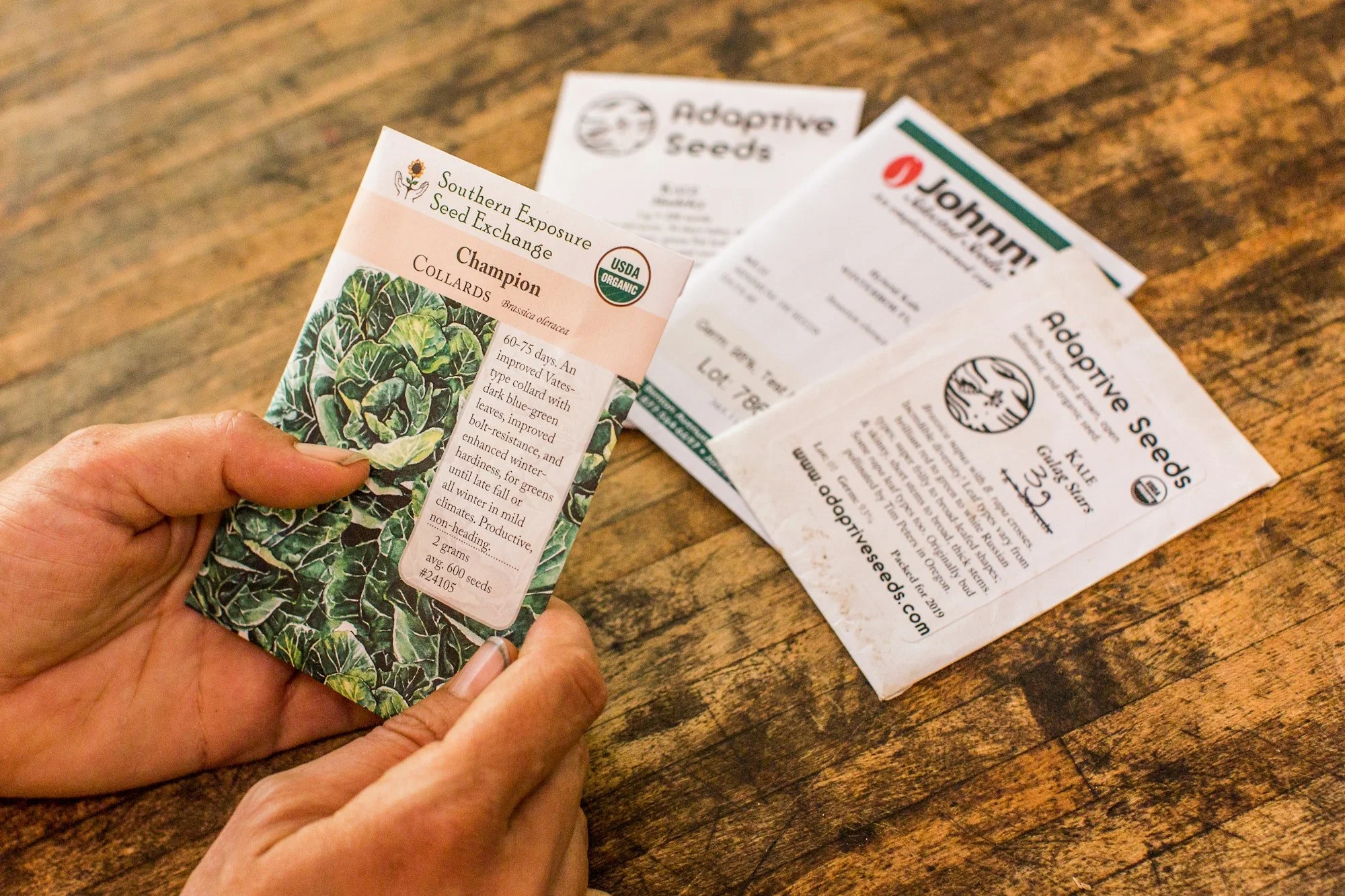
Photo by Sarah Tew
Given the wide world of vegetable varieties, here’s a few simple steps for choosing seeds to suit your situation:
Ask other growers what they love, especially long-time gardeners and organic farmers. Often gardeners will have a lot to say if you ask them “what’s the best zucchini to grow here?” You’ll get knowledge rooted in the place where you both are growing.
Understand the unique conditions, pests, and disease in your area. Many of the potential benefits of vegetable varieties are their adaptation to stressors. Ask other growers, your Extension Agent, or even do an online search to get a sense of which pests and diseases are usually an issue for specific crops you’d like to grow. Then search for varieties that have proven resistance to those pressures. Similarly, learn what soil type and climate type you’re working with and choose crops suited for those conditions.
Buy your seeds from smaller, independent, bioregionally-focused seed companies. These seed growers are stewarding the wisdom and resilience of the seeds themselves, and usually offer lots of great growing info in their catalogues and online. Even the same named variety—Speckled Roman paste tomato, for example—will adapt to different growing conditions over time, so buying seeds that have been grown in conditions similar to yours will result in plants better suited to those conditions.
Explore and experiment! When it comes to flavor, your own tongue is the only judge of what tastes best to you. And even when a particular variety isn’t specifically resistant to a pest, disease, or other stressor, it may show extra vigor or resilience in your particular garden. Trying out different varieties is usually fun and exciting, and it can also help you find your own personal garden all-stars.
Join the Ancient Conversation
Every seed carries a story—of the human hearts and hands that shaped it, the soil that held and nourished it, the seasons it survived.
When you choose varieties thoughtfully, you're joining that ancient conversation between humans and plants. You might just harvest something magical along with those bigger baskets of vegetables: a sense of awe and connection as you break down barriers between yourself and the rest of the living world.
Ready to Grow Deeper?
Whether you're just starting out or looking to refine your skills, we're here to help you build a thriving, bountiful food garden.
The New Natural Food Garden - Our comprehensive guide to growing abundant, resilient gardens in harmony with nature
Online Gardening Classes - Learn at your own pace with hands-on video instruction and community support
